
From PDF to Action: Rethinking Your Inspection Report
If you’ve ever tried to act on a traditional inspection report, you know the pain. A 60–100 page PDF (or even one exceeding 1,000 pages!) arrives in your inbox, packed with dozens of photos, cryptic diagrams, and technical jargon. By page ten, you’re asking yourself: what exactly am I supposed to do here?
And that’s the problem. Traditional inspection reports often leave teams frozen, unsure where to start. Decisions are delayed, repairs are over-engineered “just in case,” and some reports end up shelved entirely, gathering digital dust. Re-inspections become routine because the original report didn’t provide clear direction. The cost? Time, money, and unnecessary risk.
Why Traditional Inspection Reports Fall Short
So why do so many inspection reports fail to deliver implementable action?
Firstly, many reports are written for compliance rather than decision-making. They tick boxes, satisfy auditors, and create a paper trail but they rarely help you understand what’s really wrong.
Secondly, a ‘cookie cutter’ approach dominates. Defects are logged in isolation, photos scattered throughout pages, and recommendations remain vague: “monitor this area” or “consider strengthening”. They err on the side of caution, often ignoring the true operational impact.
The result? A perfectly detailed inspection report that doesn’t actually answer the most important question: what do we fix first, and why?
What Decision-Makers Actually Need
Decision-makers need clarity, not complexity. An effective inspection report should answer four critical questions:
- What is wrong?
- Where is it?
- How serious is it?
- What needs to be done and what happens if we do nothing?
Rather than concluding a process, inspections serve as the starting point for taking action. Reports that fail to translate observations into clear decisions are costing organisations both time and money.
How 3D Models Change the Conversation
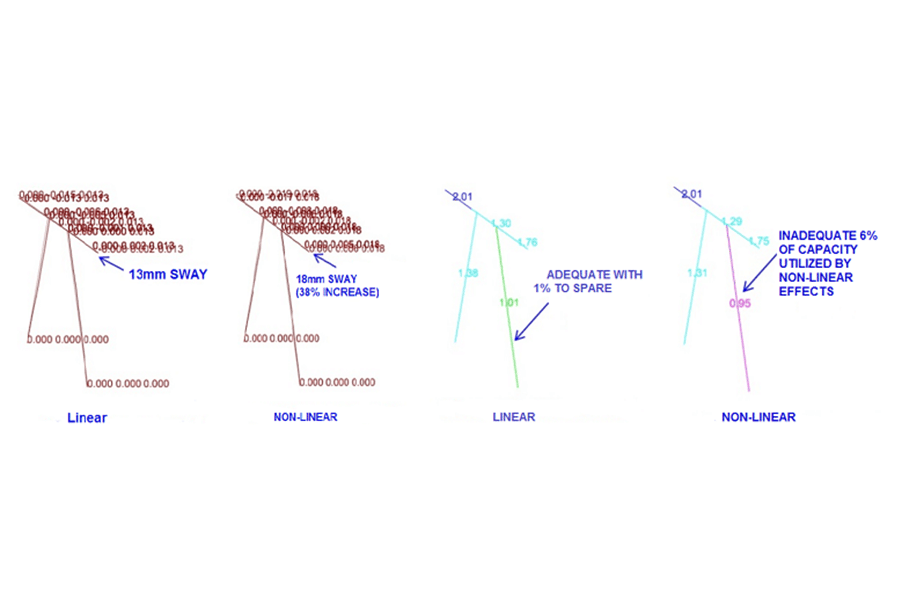
This is where Yenem’s approach transforms the traditional inspection report. By incorporating 3D models, we move beyond pages of photos and technical jargon:
- Defects are isolated visually, so stakeholders immediately see the problem.
- Context is everything and issues aren’t floating in a vacuum but shown in their operational environment.
- Proposed fixes can be demonstrated directly in the model, allowing engineers, maintenance teams, and contractors to align without ambiguity.
Unlike conventional inspection reports, a 3D-enabled inspection report doesn’t require a workshop to explain. Stakeholders can grasp the issue at a glance, speeding up decisions and reducing misunderstandings.
The Outcome: Faster, Clearer, Lower-Risk Decisions
Clear inspection reports deliver real business benefits. Management can quickly understand issues and approve necessary actions, while repairs are accurately scoped, preventing both over- and under-spending. When everyone sees the same picture, RFIs and rework are minimised, saving time and reducing frustration across teams.
Recurring inspections also become easier to track, benchmark, and plan, ensuring continuity and consistency over time. By turning inspection reports into decision-ready tools, teams can reduce risk, improve alignment between engineering, maintenance, and contractors, and achieve better outcomes across the entire workflow.
Rethinking What “Good” Looks Like
It’s time to challenge the assumption that longer inspection reports equal better outcomes. A good inspection report isn’t measured in pages. It’s measured in clarity, actionability, and visual insight.
If your inspection reports still require workshops to interpret, something is fundamentally wrong. It’s time to rethink inspections: make them visual, make them clear, and make them actionable. That’s how you turn information into decisions, and decisions into results.
Ready to turn your inspection reports into clear, actionable insights? At Yenem Engineering Services, we help teams move beyond long PDFs and vague recommendations, giving you decision-ready information you can trust.
Book a free consultation with our experts today, and see how 3D-enabled inspections can simplify your workflow, reduce risk, and help you make faster, smarter decisions. Whether you’re dealing with complex assets, recurring inspections, or high-stakes maintenance projects, we’ll show you a better way to manage and act on inspection data.
Don’t wait for another report to gather dust. Take the first step toward clarity and efficiency.